- • BPUT HACKATHON 2026 — Call for Student Participation Registration Open 31 August 2026–15 September 2026.
- Click here to view ***AICTE Extension of Approval-EOA 2026-2027***
- IIMT, Bhubaneswar is the first B-School in the country to start a "Lecture Note on Management"
- Admission Open for 2026-27 Academic year for B.Tech. in Computer Science & Engineering, Civil Engineering, Electrical Engineering, and Mechanical Engineering along with M.B.A. & M.C.A. | Contact details: 7381067748, 7381067752"
- Call 08069106128 for 24X7 Helpline for Women student, female faculty & female non-teaching faculty Rescue.
- Call 08069106129 for Psychological Counseling for mental health for students, faculty and non-teaching faculty.
Centre for Water, Energy & Technology.
About the Centre
The Centre for Water, Energy & Technology (CWET) is envisioned as a multidisciplinary hub dedicated to research, innovation, and sustainable development in the interconnected domains of water resources, energy systems, and advanced technologies. The centre aims to address some of the most pressing global challenges, including water scarcity, energy security, environmental sustainability, and climate change, by integrating scientific knowledge, engineering solutions, and policy frameworks. Water and energy are deeply interlinked resources. Efficient water management requires energy, while energy production often depends on water availability. The centre promotes research in areas such as water conservation, wastewater treatment, desalination technologies, smart irrigation systems, and sustainable watershed management. These efforts are essential to ensure equitable access to clean water while preserving ecological balance. In the energy domain, CWET emphasizes renewable and sustainable energy technologies. Research activities include solar, wind, biomass, and hybrid energy systems, as well as energy storage and smart grid technologies.
The centre aims to enhance energy efficiency, reduce dependence on fossil fuels, and support the transition toward low-carbon energy systems. By integrating modern tools such as artificial intelligence, Internet of Things (IoT), and data analytics, CWET seeks to develop intelligent and adaptive energy solutions for both urban and rural applications. Technology serves as the backbone of CWET’s initiatives. The centre fosters innovation in sensor development, remote monitoring systems, automation, and digital platforms for resource management. Advanced technologies are applied to monitor water quality, optimize energy consumption, and improve system reliability. The centre also encourages interdisciplinary collaboration among engineers, scientists, policymakers, and industry professionals to create practical and scalable solutions. One of the key objectives of CWET is capacity building and knowledge dissemination. The centre organizes training programs, workshops, seminars, and conferences to educate students, researchers, and professionals. It also collaborates with industries, government agencies, and international organizations to promote research partnerships and technology transfer. Through these initiatives, CWET aims to bridge the gap between academic research and real-world applications. CWET also plays a crucial role in policy support and advisory services. By conducting impact assessments and providing evidence-based recommendations, the centre contributes to the formulation of sustainable policies related to water and energy management. It supports the development of strategies that align with national and global sustainability goals, such as the United Nations Sustainable Development Goals (SDGs). Furthermore, the centre encourages innovation and entrepreneurship by supporting startups and incubation activities in the fields of water and energy technologies. It provides a platform for young innovators to develop and commercialize their ideas, thereby contributing to economic growth and job creation. In conclusion, the Centre for Water, Energy & Technology serves as a vital platform for addressing the complex challenges associated with resource management and sustainability. Through research, innovation, education, and collaboration, CWET strives to create a resilient and sustainable future by ensuring efficient utilization of water and energy resources supported by advanced technological solutions.
Vision
To become a globally recognized centre of excellence in water, energy, and technology by fostering sustainable innovations, advanced research, and transformative solutions that address the critical challenges of resource management, environmental conservation, and clean energy for societal development.
Mission
- To promote interdisciplinary research and innovation in water resources, renewable energy systems, and emerging technologies.
- To develop sustainable and efficient solutions for water conservation, energy generation, and environmental protection.
- To provide high-quality education, training, and skill development programs for students, researchers, and professionals.
- To collaborate with industries, government organizations, and research institutions for technology transfer and real-world problem solving.
- To support policy development and community engagement for sustainable resource management and climate resilience.
- To encourage entrepreneurship and innovation in clean technology and smart infrastructure.
- To contribute to national and global goals related to sustainable development, energy security, and water management.
Core Values
-
Sustainability
Commitment to responsible use and management of water and energy resources to ensure long-term environmental balance and societal well-being. -
Innovation and Excellence
Encouraging creativity, research, and technological advancement to deliver high-quality and impactful solutions. -
Integrity and Ethics
Upholding honesty, transparency, and ethical practices in research, education, and professional activities. -
Interdisciplinary Collaboration
Promoting teamwork across diverse fields to address complex challenges in water, energy, and technology. -
Environmental Responsibility
Dedication to protecting ecosystems and minimizing environmental impact through sustainable practices. -
Knowledge Sharing and Education
Fostering continuous learning, skill development, and dissemination of knowledge among students, researchers, and society. -
Community Engagement
Working closely with communities to develop practical solutions and raise awareness about water and energy conservation. -
Industry and Institutional Partnership
Building strong collaborations with industries, government bodies, and research organizations for real-world impact. -
Adaptability and Resilience
Embracing change and developing solutions to address evolving global challenges such as climate change and resource scarcity. -
Global Perspective
Aligning research and innovation with national and international sustainable development goals.
Members
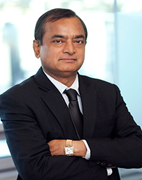
Mentor
Dr. Rabi Bastia
Dr. Rabi Bastia, Padma Shri awardee, is a globally respected geoscientist, energy thought leader, and industry veteran with over three decades of distinguished service to the petroleum and energy sector. He is the CEO of Oilmax Energy Pvt. Ltd. and has earlier led the exploration group at Reliance Industries for more than 16 years, playing a pivotal role in placing India prominently on the global oil and gas map. He has been instrumental in several landmark hydrocarbon discoveries, including the world’s largest gas discovery of 2002 in the Krishna–Godavari Basin, along with numerous finds across India’s offshore basins, and holds a world record for the highest number of mineral discoveries. Dr. Bastia holds a Ph.D. from IIT Kharagpur and a D.Sc. from ISM Dhanbad—the first awarded in India in petroleum research—and completed his postgraduate studies in Norway. A Distinguished Alumnus of IIT Kharagpur, he has served as Adjunct Professor at multiple IITs and collaborated with leading global universities. His contributions extend to emerging domains such as natural (white) hydrogen, reinforcing India’s leadership in sustainable energy. He has authored authoritative reference books published by Elsevier and others, alongside his recent work Purpose of Life, reflecting his integrated vision of science, leadership, and human values.
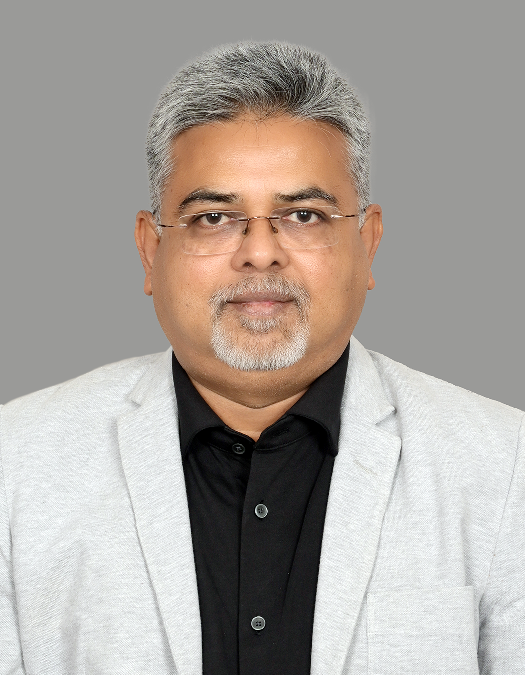
Chief Patron
Dr. Srikanta Patnaik
Dr. Srikanta Patnaik is the Founder Director & Chairman of IIMT, Bhubaneswar. He has completed his MBA from Sambalpur University in the year 1991 and received his Ph. D. (Engineering) on Computational Intelligence from Jadavpur University, India in 1999. Prof. Patnaik supervised 25 Ph. D. Theses and more than 60 Master theses in the area of Computational Intelligence, Soft Computing Applications and Re-Engineering. Dr. Patnaik has published around 100 research papers in international journals and conference proceedings. He is author of 3 text books and more than 100 edited volumes and few invited book chapters, published by leading international publisher like Springer-Verlag, Kluwer Academic, etc. Dr. Patnaik is the Editors-in-Chief of International Journal of Information and Communication Technology and International Journal of Computational Vision and Robotics published from Inderscience Publishing House, England and also Editors-in-chief of Book Series on “Modeling and Optimization in Science and Technology” published from Springer, Germany, Book Series on Advances in Computer and Electrical Engineering (ACEE) and Book Series on Advances in Medical Technologiesand Clinical Practices (AMTCP), published from IGI-Global, USA. He is Editor of Journal of Information and Communication Convegence Engineering, published by Korean Institute of Information and Communication Convegence Engineering. He is a also Associate Editor of International Journal of Granular Computing, Rough Sets and Intelligent Systems (IJGCRSIS) and International Journal of Telemedicine and Clinical Practices, published from Inderscience Publishing House, England.

Patron
Prof. Jayadev Kar
Prof. Jayadev Kar received his B.Sc Engg. (Electronics & Telecommunication Engineering) with HONOURS from UCE, Burla (at present VSSUT) in 1987 and M. Tech in Computer Science (Image Processing) and Ph.D. from Utkal University, Vanivihar, Bhubaneswar in the year 2006. He was a former Professor, MCA and Dean at Regional College of Management, Bhubaneswar. He was the former Technical Head of Pathani Samanta Planetarium, Bhubaneswar, the only R & D Institute of Science and Technology Department, Government of Odisha. He has guided many Ph.D. Theses. Dr. Kar is the co-author of 9 books for Vocational Education in the area of Basic Foundation Course, Repair & Maintenance of Radio & TV Engineering and Electrical Engineering Maintenance including Basic Foundation Courses. Prof. Kar is having 37 years of experience dealing with academics, curriculum development, administration, examination, end-to-end management. Prof. Kar is passionate about student-centred curriculum design, informed by ongoing study of student psychology, observational methods, and adaptive pedagogy, contributing better outcomes and institutional growth. Currently, he is working as Director of Interscience Institute of Management & Technology.
Er. Radha Mohan Rout
Er. Radha Mohan Rout, IES (Retd.), is a distinguished officer of the Indian Defence Services of Engineers (IDSE), having joined the Military Engineer Services (MES) through the Engineering Services Examination (IES) 1988 and entered service in 1991 after resigning from NTPC. Over the course of his illustrious career, he served in key technical and leadership roles within the defence engineering establishment. He retired as Director (Utilities) from the Army Headquarters Engineers Branch, where he oversaw critical infrastructure and utility management functions. As Head of the Electrical and Mechanical Directorate of the Military Engineer Services, he provided strategic direction in planning, execution, and modernization of defence utility systems. He also served as Energy Advisor to the Ministry of Defence, contributing significantly to energy efficiency and conservation initiatives across defence establishments. With vast experience in electrical and mechanical engineering systems, he played a pivotal role in strengthening sustainable energy practices within military infrastructure. His expertise spans large-scale utility management, policy formulation, and technical administration. Known for his disciplined leadership and forward-thinking approach, he has consistently promoted energy optimization and green practices. His professional journey reflects dedication, integrity, and excellence in public service. Even after retirement, he continues to inspire young engineers and professionals with his rich experience and commitment to nation-building. Currently, he is working as Professor of Practice in Electrical Department at IIMT, Bhubaneswar.
Air Commodore Niranjan Kumar Parhi
Air Commodore Niranjan Kumar Parhi (Retd.) is a distinguished former officer of the Indian Air Force, having rendered 34 years of dedicated and disciplined service to the nation. An accomplished technology leader, he has extensive expertise in Communication Systems, Information Technology, Cyber Security, Cloud Security, and Data Privacy. A Master’s graduate from Indian Institute of Technology Bombay, he also holds an M.Sc. (Defence Studies) from University of Madras and a Master of Management Science (MMS) from Osmania University. During his illustrious career, he served in several key leadership roles, including four tenures as Commanding Officer, Chief Technology Officer (CTO) of the largest Network Operations Centre (NOC) and Data Centre of the IAF, Chief Operations Officer at a Tri-Services Organisation, and Director as well as Principal Director (IT) in the IAF. He was also a founding member of the Defence Cyber Agency under the Ministry of Defence, contributing significantly to strengthening India’s cyber defence framework. He has successfully executed numerous Communication, IT, and Cyber Security projects in India and abroad. Air Commodore Parhi is an alumnus of the prestigious Defence Services Staff College and College of Defence Management. A Certified Cyber Security Professional, he holds globally recognized certifications including CISSP ((ISC)²), CISA and CISM (ISACA), ISO 27001, CISO, National Cyber Scholar (ISAC, India), Cyber Security GRC, Cyber Crime Intervention Officer (CCIO), and NCBIS (ISAC, India). He has delivered over 50 lectures, workshops, and seminars on Cyber Security and emerging technologies at reputed institutions across India, including XIM University and National Institute of Technology Patna, among others. Currently, he serves as Professor of Practice in the Department of Computer Science (Cyber Security) at IIMT, Bhubaneswar, and also works as an Independent Cyber Security and Data Privacy Consultant, Corporate Advisor, and Speaker on Cyber Security, Cloud Computing, Artificial Intelligence, Blockchain Technology, and Applied Cryptography. He is a regular defence and strategic affairs panelist on prominent Odia television channels such as Kalinga TV, OTV, and Kanak TV, with appearances in over 100 programmes.

Prof. Bibhu Prasad Routray
I.I.M.T., Bhubaneswar, Odisha, India
Prof. Bibhu Prasad Routray has completed his B. Tech in Civil Engineering in 1986 and M.Tech. in Hydraulic & Irrigation Engineering in during 1992 from VSSUT, Burla (formerly known as UCE, Burla). He has served the Department of Soil Conservation as Assistant Engineer during up to 1991, then subsequently served the Department Housing and Urban Development, Govt. of Odisha in different capacity up to 2021. After superannuation, he worked as the state consultant in Voltas Ltd (a TATA venture) till September 2024 and subsequently worked as the consultant with “Autograph Ventures LLP” since October 2024. He is now continuing as Professor of Practice at IIMT, Bhubaneswar.
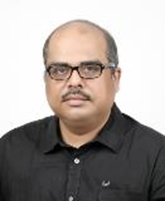
Mr. Debasis Mohapatra
Mr. Debasis Mohapatra is a distinguished industry leader and organizational transformation specialist with over three decades of global experience across India, South Asia, Africa, and the Middle East. His expertise spans Organizational Behaviour, Human Resource Strategy, Organizational Development, Change Management, Manpower Planning, and Institution Building, positioning him as a valuable contributor to practice-oriented management education. He holds a Post-Graduate Diploma in Business Management from Xavier Institute of Management, Bhubaneswar (XIMB) and a Bachelor’s degree in Electrical Engineering from Sambalpur University. Over the course of his career, he has held senior leadership roles at prominent organizations such as Grant Thornton Bharat LLP, PricewaterhouseCoopers Pvt. Ltd., Deloitte, Tata Consultancy Services, AES-CESCO, and Coal India. He has also served as a trusted advisor to governments, regulatory authorities, development agencies, and major corporations. His professional journey includes leading large-scale organizational restructuring initiatives, workforce transition strategies, and comprehensive HR transformation programs. He has worked closely with international organizations like the Asian Development Bank, World Bank, DFID (UK), and Millennium Challenge Corporation (Ghana), contributing to reforms in corporate governance, HR systems, succession planning, and capability development. Widely recognized for his ability to translate complex transformation agendas into practical frameworks, he has designed over 100 workshops and training programs focusing on leadership development, performance orientation, change readiness, and competency mapping. His multi-country experience includes capacity-building initiatives in Sri Lanka, Nepal, Ghana, Nigeria, Tanzania (Zanzibar), and the UAE, where he has supported institutional strengthening and process transformation. As a prospective Professor of Practice, Debasis brings a unique blend of academic insight and real-world expertise, enriching learning through case studies, simulations, and experiential methods. He remains deeply committed to mentoring future leaders, advancing applied research, and fostering stronger academia-industry collaboration through evidence-based and field-driven learning approaches.

Dr. Smrutiranjan Nayak
I.I.M.T., Bhubaneswar, Odisha, India
Dr. Smrutiranjan Nayak has 15+ years of experience in Teaching, Research and Administration. He obtained Ph.D. in Power system Engineering from Siksha 'O' Anusandhan (Deemed to be University), Odisha, India in the year 2022.He has authored or co-authored more than 26 papers in international journals, Indian patents, book chapters, and international conferences. He is also Life member of the Institution of Engineers, Solar Energy Society of India, and Indian Society of Lighting Engineers. His research interests include Renewable Energy, Power Electronics & Drives, Power Systems, Power Quality, Artificial Intelligence, Smart Grid and Micro Grid technologies.

Ms. Ankita Mohapatra,
I.I.M.T., Bhubaneswar, Odisha, India
Ms. Ankita Mohapatra serves as an Assistant Professor in the Department of Basic Science and Humanities at IIMT Bhubaneswar. She holds an MSc degree along with a B.Ed, showcasing her dual expertise in subject matter and pedagogy. With two years of teaching experience, Ankita specializes in Chemistry and is passionate about delivering quality education. She contributes actively to the academic framework of the institution, fostering a strong learning culture among students.

INTERSCIENCE Institute of Management & Technology (IIMT), Bhubaneswar started in 2007 by a team of dedicated academicians with the motto to impart all-round education in the field of management and technology.
Important Links
- Online Grievance
- Mandatory Disclosure
- Govt. Approve Fee Structure
- AICTE Notifications
- AICTE Compliance Reports
- Student Induction Programme
- Feedback
- NDLI Club
- AICTE Approval
- AICTE Scholarship
- Scholarship Schemes | Students Development schemes
- Provision to watch MOOCS Courses through Swayam
- Green Campus- Clean Campus Policy
Organisations
Cell & Committee
- SGRC Cell
- Ombudsperson
- Grievance Redressal Committee
- Internal Complaint Committee
- SC/ST Committee
- Anti Ragging Committee
- Internal Quality Assurance Cell
- Institution Industry Cell
- Equal Opportunity Cell
- Facilities for differently-abled
- Alumni Cell
- Innovation Cell
- Social Media Cell
- Intellectual Property Cell
- Women Protection Committee (WPC)
Policy & Report
National Academic Depository
Contact Us
Interscience Institute of Management & Technology, Bhubaneswar
ଇଣ୍ଟରସାଇନ୍ସ ଇନଷ୍ଟିଚ୍ୟୁଟ୍ ଅଫ୍ ମ୍ୟାନେଜମେଣ୍ଟ & ଟେକ୍ନୋଲୋଜି, ଭୁବନେଶ୍ଵର
Address:Kantabada, Bhubaneswar, Odisha 752054
Call us: 7381067748
Copyright © All rights reserved | Interscience Institute of Management and Technology